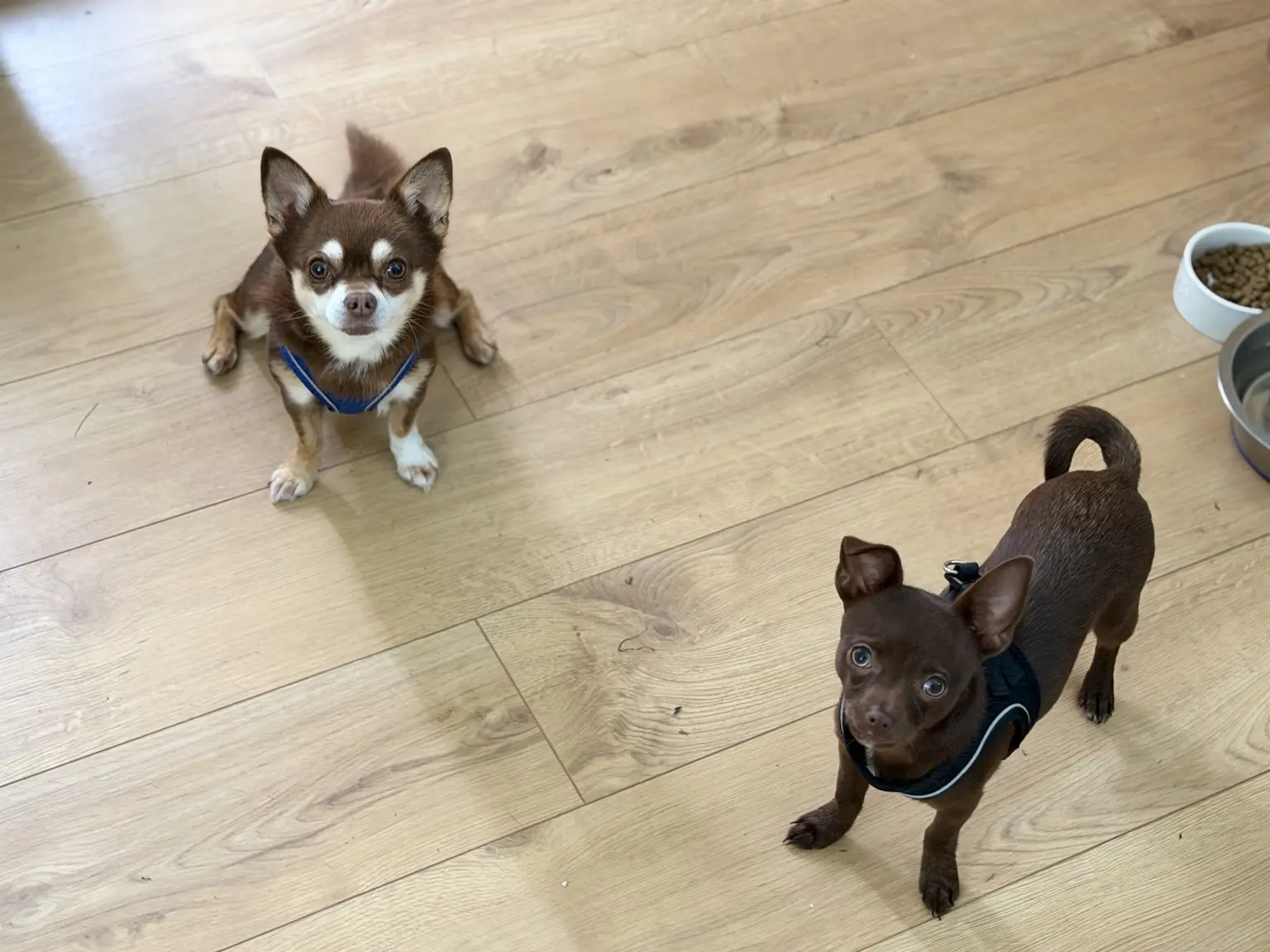
Chihuahua
Typical adult pet Roughly 2–4.5 kg
RKC show standard: 1.8–2.7 kg preferred. A UK veterinary study recorded a 3.4 kg median.
Tiny in stature and full of character, Chihuahuas are bright, affectionate companions that often form very close bonds with their people. They enjoy play, learning and exploring just as larger dogs do. Positive training, thoughtful socialisation and gentle handling help their confidence flourish.
- Daily exercise
- At least 30 minutes
- Also plan for
- Warmth, dental care and safe handling
Cavalier King Charles Spaniel
Typical adult pet Roughly 5–10 kg
RKC show standard: 5.4–8.2 kg.
Warm, gentle and sociable, Cavaliers are companion dogs with a sporting side. Many are equally pleased to share a country walk or a comfortable sofa and thrive on being part of family life. Their loving nature comes with a need for company, coat care and careful heart, eye and neurological health checks.
- Daily exercise
- Around 1 hour
- Also plan for
- Company, coat care and health screening
Border Terrier
Typical adult pet Roughly 5–8 kg
RKC show standard: about 5–7 kg.
Cheerful, affectionate and adventurous, Border Terriers pack plenty of working-dog spirit into a compact frame. They often enjoy active family life, purposeful walks and games that use their clever noses. Their curiosity and terrier persistence make patient recall training, enrichment and secure spaces particularly valuable.
- Daily exercise
- Around 1 hour
- Also plan for
- Recall work, enrichment and coat care
Staffordshire Bull Terrier
Typical adult pet Roughly 11–18 kg
RKC show standard: 36–41 cm; about 11–17 kg.
Affectionate, enthusiastic and strongly people-focused, Staffies are sturdy companions known for bringing warmth and energy to family life. They tend to enjoy play, learning and close involvement with their household. Their strength and exuberance are best channelled through consistent reward-based training, positive socialisation and calm handling.
- Daily exercise
- Around 1 hour or more
- Also plan for
- Training, socialisation and secure play
Beagle
Typical adult pet Roughly 9–14 kg
RKC show standard: 33–40 cm at the shoulder.
Merry, sociable and endlessly curious, Beagles are pack hounds that usually relish company and a good adventure. Their remarkable sense of smell makes sniffing games and varied walks especially rewarding. Once an interesting scent appears it may outrank recall, so patient training and secure exercise areas matter.
- Daily exercise
- Around 1–1½ hours
- Also plan for
- Scent work, company and secure boundaries
Whippet
Typical adult pet Roughly 10–18 kg
RKC show standard: 44–51 cm at the shoulder.
Graceful, gentle and affectionate, Whippets combine impressive speed outdoors with a reputation for being calm and comfortable at home. They enjoy warm resting places and safe chances to stretch their legs. Their sensitivity responds well to kind training, while secure spaces help manage a natural instinct to chase.
- Daily exercise
- Around 1 hour
- Also plan for
- Secure running space and a warm coat
Labrador Retriever
Typical adult pet Roughly 25–36 kg
RKC show standard: about 55–57 cm at the shoulder.
Friendly, outgoing and eager to join in, Labradors are versatile companions that often love learning and working alongside people. Walks, retrieving, swimming and scent games can all put their enthusiasm to good use. Regular training, measured feeding and plenty of purposeful activity help them remain settled and healthy.
- Daily exercise
- Around 2 hours
- Also plan for
- Training, shedding and health-tested parents
Cocker Spaniel
Typical adult pet Roughly 12–16 kg
RKC show standard: 38–41 cm; about 13–14.5 kg.
Merry, affectionate and busy, Cocker Spaniels often bring infectious enthusiasm to walks, games and family life. Their gundog heritage gives many a keen nose and a real appetite for activity and learning. Working and show-bred lines can differ considerably in drive, so ask about the parents’ temperament and lifestyle.
- Daily exercise
- At least 1 hour
- Also plan for
- Scent games, grooming and ear care
Border Collie
Typical adult pet Roughly 12–22 kg
RKC show standard: around 53 cm; females slightly less.
Brilliant, responsive and deeply engaged with their people, Border Collies can be wonderfully rewarding partners for active homes. They tend to thrive when given purposeful training, problem-solving and varied outlets for their herding intelligence. Just as importantly, they may need patient help learning how to relax and switch off.
- Daily exercise
- Around 2 hours or more
- Also plan for
- Mental work and careful arousal management
German Shepherd Dog
Typical adult pet Roughly 22–40 kg
RKC show standard: about 55–66 cm at the shoulder.
Intelligent, devoted and highly versatile, German Shepherd Dogs often build powerful partnerships with their families. They flourish with consistent kind training, meaningful mental work and well-managed social experiences. Prospective owners should prioritise stable temperament, sound movement and verified health screening as carefully as appearance.
- Daily exercise
- Around 2 hours
- Also plan for
- Training, shedding and joint screening
Boxer
Typical adult pet Roughly 25–36 kg
RKC show standard: 53–63 cm; about 25–32 kg.
Playful, affectionate and famously expressive, Boxers often keep a joyful, youthful outlook well into adulthood. They enjoy being involved with their household and benefit from energetic games alongside patient, consistent training. Choose for comfortable breathing and sound health, and adapt activity carefully in warm weather.
- Daily exercise
- Up to 2 hours, health permitting
- Also plan for
- Training and heat-aware activity
Newfoundland
Typical adult pet Roughly 45–70 kg
RKC show standard: 66–71 cm; about 50–69 kg.
Gentle, patient and impressively powerful, Newfoundlands are sociable companions with a celebrated water-working heritage. Their steady nature can be immensely appealing, but their giant scale shapes almost every practical decision—from space and transport to grooming and veterinary costs. Careful growth and joint-friendly exercise are especially important.
- Daily exercise
- Around 1 hour, low impact
- Also plan for
- Space, daily grooming and giant-dog costs
Bulldog
Typical adult pet Roughly 18–27 kg
RKC show standard: about 23–25 kg.
Affectionate, steady and delightfully determined, Bulldogs often enjoy close companionship and a relaxed home routine. Their distinctive character should never depend on restricted breathing or uncomfortable movement. Look for open nostrils, quiet breathing and sound mobility, with veterinary guidance on suitable exercise and warm-weather care.
- Daily exercise
- 30–60 minutes, health permitting
- Also plan for
- Breathing assessment and heat protection
French Bulldog
Typical adult pet Roughly 8–14 kg
RKC show standard: about 11–12.5 kg.
Cheerful, playful and companionable, French Bulldogs often thrive on being close to their people and can adapt well to different homes. Responsible selection is crucial: comfortable breathing, clear eyes, open nostrils and free movement matter far more than fashionable colours or exaggerated features. Exercise should suit the individual and the weather.
- Daily exercise
- 30–60 minutes, health permitting
- Also plan for
- Breathing assessment and heat protection