A3 portrait (297 × 420 mm). Print at actual size / 100% on A3 paper. Vector text; illustration approximately 303 ppi at its printed size. Personal, non-commercial printing permitted.
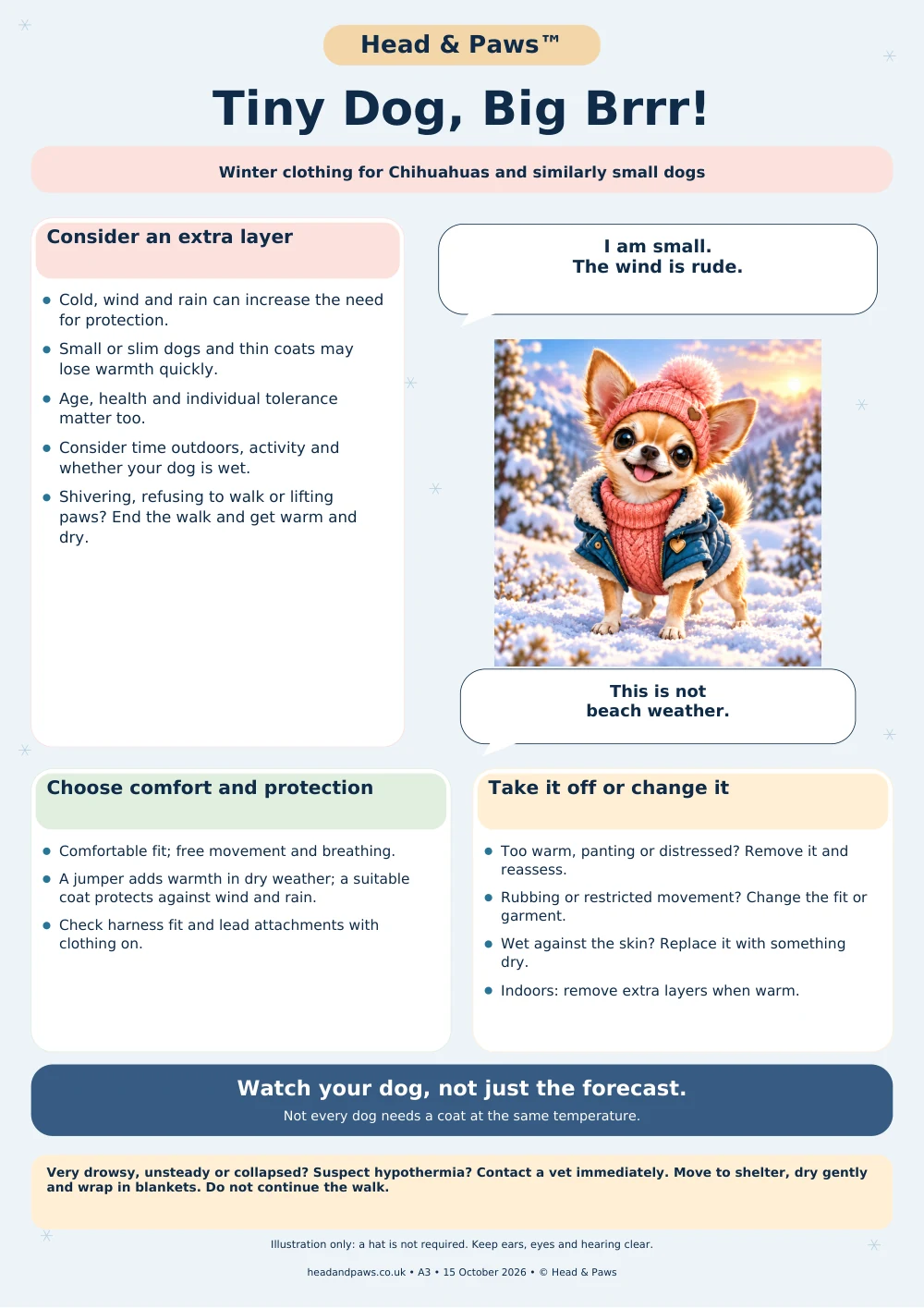
Illustration only: a hat is not required. Keep ears, eyes and hearing clear.
Poster advice in accessible text
Consider an extra layer
Cold, wind and rain can increase the need for protection.
Small or slim dogs and thin coats may lose warmth quickly.
Age, health and individual tolerance matter too.
Consider time outdoors, activity and whether your dog is wet.
Shivering, refusing to walk or lifting paws? End the walk and get warm and dry.
Choose comfort and protection
Comfortable fit; free movement and breathing.
A jumper adds warmth in dry weather; a suitable coat protects against wind and rain.
Check harness fit and lead attachments with clothing on.
Take it off or change it
Too warm, panting or distressed? Remove it and reassess.
Rubbing or restricted movement? Change the fit or garment.
Wet against the skin? Replace it with something dry.
Indoors: remove extra layers when warm.
Very drowsy, unsteady or collapsed? Suspect hypothermia? Contact a vet immediately. Move to shelter, dry gently and wrap in blankets. Do not continue the walk.
I am small. The wind is rude. · This is not beach weather.
Plan for the individual dog
Body size and condition, coat thickness, age, health, wind, rain, temperature, time outside and exercise intensity all affect comfort. Wet fur and waiting around can increase chilling. There is no universal temperature at which every Chihuahua needs clothing. Ask your vet about an unwell or particularly vulnerable dog; some puppies and older dogs need extra care. Clothing does not make unsuitable weather or a long exposed walk safe.
Cold signs mean change the plan
Shivering, slowing down, reluctance to continue or repeated paw lifting can indicate cold or another problem such as pain. Head for shelter or home; dry and warm your dog gently. Do not simply add another layer and carry on. Seek veterinary advice if signs persist or the cause is unclear. Unusual drowsiness, confusion, poor coordination, pale gums or collapse need immediate veterinary contact. Severe hypothermia can occur even after shivering stops. Use blankets, avoid direct hot water bottles or other intense heat, and follow veterinary advice.
Jumper, weather-resistant coat and harness
A dry jumper provides insulation but may soak through and offer little protection from wind. Choose suitable wind and rain protection for wet, exposed conditions; replace wet layers and check underneath regularly. Introduce clothing gradually with rewards; do not force a distressed dog. Recheck harness adjustment, buckles and front or rear attachment access whenever layers change. Follow both manufacturers’ instructions; attach the lead to the proper harness or collar point, never a decorative clothing loop. A coat or integrated harness is not automatically escape-resistant. Keep identification and visibility effective, and allow normal movement and breathing without rubbing.
Comfort before costume
Remove clothing if your dog is too warm, panting unusually, rubbing or distressed, and seek veterinary help for persistent or severe symptoms. Monitor warmth indoors. The cartoon hat and layered outfit are illustrative, not an instruction to dress every dog that way: keep the eyes, ears and hearing unobstructed and avoid loose decorations. Fit and individual welfare take priority.
Take a well-fitting jacket for toy, small, short-coated or lean dogs when your dog or the conditions indicate. Chihuahuas and similar dogs can lose body heat more quickly because of their small size and limited insulation.
There is no universal temperature threshold for a coat. Wind, rain, damp fur, slow walking, waiting outside, age, health and the individual dog all affect cold tolerance. A healthy, active, well-insulated dog may need different protection from a dog that feels the cold quickly.
Choose function over fashion
A jacket should cover the back and chest, stay dry where possible and allow normal shoulder movement, breathing and toileting. Remove or change it if your dog becomes hot, wet underneath or uncomfortable.
Adapt the walk.
Shorten the route when needed and avoid prolonged waiting outside. Shivering, lifting paws, a hunched posture, slowing down, repeatedly seeking shelter or reluctance to continue are signs to return somewhere warm and dry.
Dry coats and check paws.
Dry your dog after wet or snowy walks. Check between toes for compacted snow, ice or irritation. Wipe paws and fur after contact with road grit or de-icing products, and do not allow licking until clean.
Be seen and avoid hazards.
Use reflective or illuminated walking equipment in poor light. Keep dogs away from frozen water and clean up antifreeze spills immediately; antifreeze can be fatal if swallowed.
Persistent shivering, unusual tiredness, weakness, confusion, pale gums or collapse require prompt veterinary advice. Move your dog somewhere warm and dry while contacting your vet.
At dusk, dawn or night, choose a familiar route with good sight lines, safe footing and room for both dogs. Reflective material needs an external light, such as headlights; it does not glow by itself. Add suitable lights for you and the dogs, without loose straps or dangling loops that can snag. Test charge, fastening and visibility before leaving; carry a backup light. Lighting helps others see you but does not guarantee they have noticed.
Keep fixed leads manageable on narrow pavements and around cyclists; stop in a safe wider place rather than trying to untangle while moving. Use separate walks or another handler when darkness prevents you observing both dogs and the path. Rain, fog, ice, wind and uneven ground can make a previously easy route unsuitable. In remote areas plan navigation, weather, communication and a return option; avoid unlit rural road sections with no safe space to pass traffic.
Great Britain: Highway Code rules 2–3 advise facing oncoming traffic where there is no pavement, single file when needed, and reflective materials in darkness. Rule 56 advises short dog leads beside traffic and on shared paths. Northern Ireland has its own Code. These are advisory provisions; follow local requirements elsewhere.
Reviewed 15 October 2026 against the welfare sources below (in English). General guidance, not an individual veterinary assessment. English, French and Spanish aligned internally; no independent clinical or native-speaker certification.