Safety, recovery and life together
Walking Two Dogs Safely — Lead Control, Road Awareness and Emergency Situations
Practical lead control, cautious crossing and a concise emergency checklist.
Two leads: practise the awkward moments
Before leaving, check both fittings and rehearse stopping and turning in a quiet space. Hold leads so you can shorten or release slack independently; do not wrap them around fingers. If they cross, stop somewhere safe and untangle before moving. Near roads, pause away from the kerb and organise both dogs before crossing.
For example, a slower small dog and an energetic larger dog may need different routes or separate walks. Give unfamiliar dogs space rather than allowing a close lead greeting. On narrow or slippery terrain, turn back if you cannot manage both safely. Practise recall and calm lead skills individually; use a second capable adult or separate outings when reactions, speed or terrain exceed your control.
Targeted practical addition checked 24 October 2026. General editorial guidance; examples are illustrative, not clinical review or guaranteed outcomes. Source in English: Scottish SPCA
Before every walk
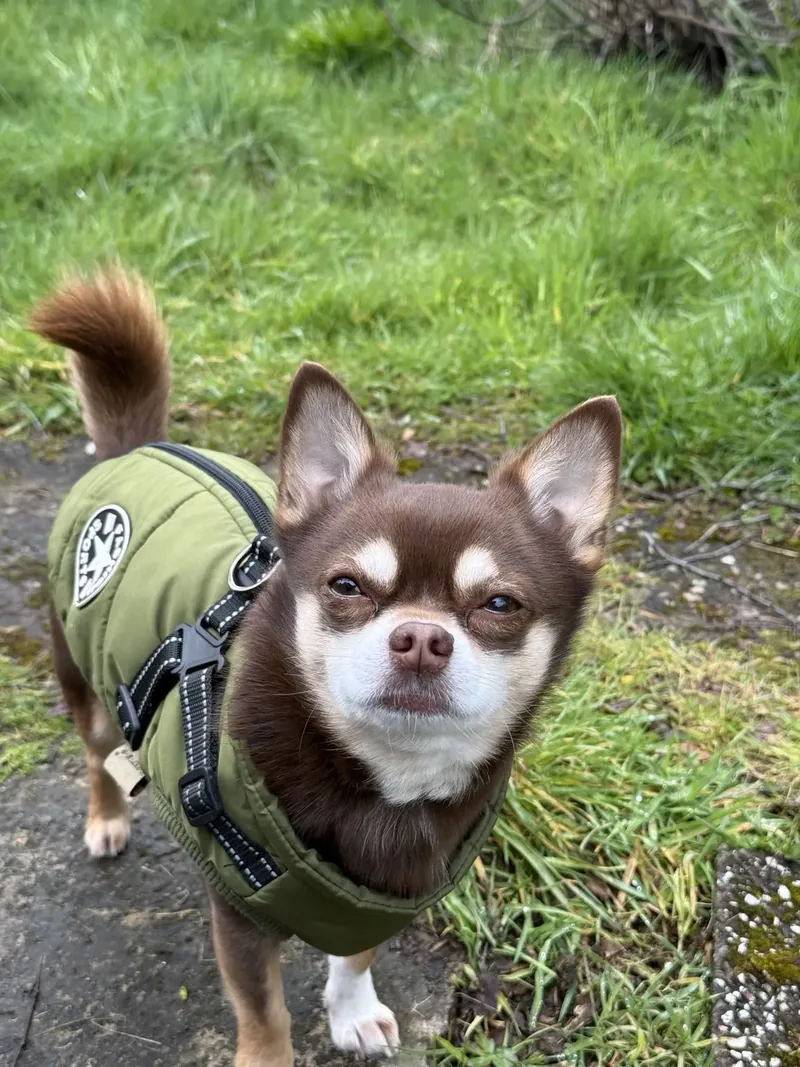
Check the equipment
Inspect straps, stitching, buckles and attachment points for damage.
Check the individual fit
Follow the manufacturer’s fitting instructions. Check movement, rubbing and escape risk; extra straps alone do not guarantee security.
Check before setting off
Fasten and check every clip and lead connection in a secure place. Recheck after growth, coat changes or adjustment.
Lead control and equipment
Train each dog individually before joint walks. Check collars or harnesses fit securely without restricting comfort; inspect clips, stitching and leads before leaving. Secure one dog while opening doors or gates. Use manageable fixed-length leads near hazards, keep them untangled and never wrap them around your hands. Do not attach leads to your body where sudden pulling could cause a fall or other injury.
Couplers are not suitable for every pair: different sizes, speeds or confidence may require independent leads, a second handler or separate walks.
Choose a walk you can manage
Allow space when passing pedestrians, cyclists and other dogs; move away or wait in a safe place rather than force a close encounter. Different exercise and health needs may mean different routes or solo walks. Retractable leads can allow sudden movement, tangling or delayed control, particularly with two dogs. Avoid them near roads, on narrow paths, around livestock or in mountainous or difficult terrain; choose secure fixed-length control and a route within both dogs’ and your capabilities.
Road awareness — the handler decides
Dogs must never be relied upon to judge whether a road is safe to cross. Teach each dog separately to stop before a kerb, wait while you check traffic and move on your cue. Start in a secure traffic-free place, then quiet sidewalks with secure restraint. Reward attention and increase distance from vehicles or cyclists if the dog lunges or becomes frightened; never practise uncontrolled exercises beside live traffic.
Crossing with two dogs
Keep both securely restrained on manageable fixed-length leads, away from traffic where practicable. Stop before the kerb, untangle leads and check traffic yourself. Use an appropriate designated crossing, remain attentive and move only when safe. Avoid phone use and unnecessary distractions. If sudden movement would overwhelm your control, choose a second handler or separate walks instead.
British guidance and local law
Great Britain’s Highway Code Rule 56 advises short leads on sidewalks, roads and paths shared with cyclists or horse riders; this is advisory wording. Separately, section 27 of the Road Traffic Act 1988 requires a lead on roads designated by local-authority order in England, Wales and Scotland, subject to the provision’s exceptions. It is not an all-roads requirement. Northern Ireland has separate official Highway Code guidance and legislation.
Rule 57 concerns vehicle restraint; Rule 58 concerns herded animals, not teaching pet dogs to cross. Check local orders and restrictions. British rules are not the law of France, Spain or other countries; consult local authorities where you walk.
If something goes wrong
Stop and move to a safe place if possible. Secure the dog still under control before seeking help for the other; do not enter traffic, chase a frightened dog or take a dangerous physical risk. If a collar slips or a dog bolts, observe location and direction, ask a helper to watch from safety and use the existing missing-dog action checklist. Do not grab at an unfamiliar or reactive dog or put hands between fighting dogs.
Create distance and use a safe barrier only without approaching the biting zone.
Next steps
Walking emergency check — save or print this page
Preparation reduces avoidable confusion; this checklist cannot guarantee safety.
- Before leaving: charged phone, identification, veterinary and emergency contacts, sound equipment and a helper plan.
- Bolting, sudden opposite pulls or equipment failure: stop if safe, retain secure control without wrapping leads around hands, and request another handler.
- Entangled leads: move away from traffic and other dogs; ask a helper to secure each dog before untangling. Do not reach into a bite-risk area.
- Injury or exhaustion: stop the walk, find safe shelter and contact a veterinarian; do not force the dog onwards or attempt an unsafe two-dog carry.
- If you fall: prioritise your own safety, request assistance and emergency services for serious injury or immediate danger. Never enter traffic to retrieve a dog.
- Keep one dog safely separated while arranging veterinary or recovery assistance for the other.
Existing emergency tools
Missing Dog Action Checklist · Emergency first response · Find veterinary help
Equipment and travel guidance
Choosing walking equipment · Walking and traveling with more than one dog
When dogs cross or a lead catches
Anticipate turns and keep each dog’s lead at a length you can manage without restricting normal movement. Pause for individual sniffing and toileting rather than letting the other dog pull ahead. If one suddenly turns, stop and create space; do not yank them back or let a line tighten across the other dog.
Stop away from hazards, keep both attached and calmly separate their positions before reversing crossed lines. Do not step over taut leads or pull trapped loops against the body. If one becomes frightened, increase distance from the trigger where safe and keep the other out of the crossing line. Avoid reaching between tense dogs. A second handler or separate outings may be necessary.
Dropped leads, slipping equipment and failures
Before leaving, check fit, stitching, worn material, buckles and that clips close fully. Test a retractable lead’s lock and return without the dog pulling. Replace damaged or unreliable equipment; carry a suitable spare fixed lead. Thin retractable cords, long extensions and sudden tension can cut, trip or entangle: use fixed leads near traffic and obstacles.
If you drop a lead or a clip fails, secure the other dog first if you can do so safely. Call the loose dog towards a safe space with your familiar cue and reward a return. Do not chase into traffic, lunge at the dog or grab a fast-moving cord. Once close and calm, attach the spare to sound, correctly fitted equipment. If a harness or collar slips, do not rely on refitting the failed arrangement and continuing.
If a retractable mechanism fails, do not grip its cord, wrap it around your hand or wind it around the dog. Encourage the dog close in a safe place, fit the spare lead before removing the faulty one, and end the outing if reliable control cannot be restored. A snagged line must not be dragged through recall: pause and free its route safely.
Do not put yourself in the carriageway or between frightened dogs to recover equipment. Seek another capable adult’s help when safe. After a collision, constriction injury or significant fall, contact a veterinarian; use the emergency guidance for urgent signs.
Evidence and review
- Dogs Trust: introducing a new dog or puppy
- ABTC: practitioner roles and referral
- Dogs Trust: understanding body language
- ABTC: assessed practitioners
- Dogs Trust: reward-based training foundations
- Dogs Trust: walking nicely
- GOV.UK: Highway Code rules 56–58 (Great Britain)
- UK legislation: Road Traffic Act 1988, section 27 (England, Wales and Scotland)
- nidirect: rules about animals (Northern Ireland)
General guidance, not an individual medical, behavioural or legal assessment. The treating veterinary team’s instructions take priority. Search outcomes, recovery and dog relationships vary. Local services and legal arrangements must be confirmed for the location; procedures here are verified for the labelled UK nations and Republic of Ireland, not assumed to apply elsewhere.
Behaviour support should use humane, reward-based methods. Ask your veterinarian about pain or illness and referral to an appropriately qualified clinical behaviour professional for safety concerns. In the UK, the ABTC register identifies assessed roles; check relevant species, role and referral requirements.
About this guidanceReview details and sources
When dogs cross or a lead catches
Practical addition reviewed 12 October 2026. Original handling synthesis; general guidance, not an individual assessment. Related evidence: Dogs Trust: puppy problem-solving · Dogs Trust: escape prevention
Dropped leads, slipping equipment and failures
Practical addition reviewed 12 October 2026. Original handling synthesis; general guidance, not an individual assessment. Related evidence: Dogs Trust: puppy problem-solving · Dogs Trust: escape prevention
Evidence and review
New practical guidance and selected sources checked 10 October 2026; not an individual clinical or legal assessment.